Evaluating Flower Plant Digital Paper Patterns for Creative Projects
In the realm of digital design and print-on-demand services, the quality and versatility of background assets play a pivotal role in the final output. Flower Plant Digital Paper Patterns have emerged as a popular resource for creators seeking botanical aesthetics that are both detailed and adaptable. These patterns are not merely decorative images; they are structured, high-resolution files designed to be tiled seamlessly across various mediums. For designers, crafters, and small business owners, understanding the technical specifications and practical applications of these digital assets is essential before integrating them into commercial or personal projects.
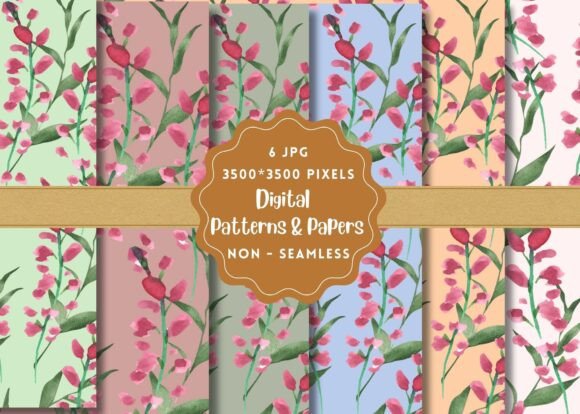
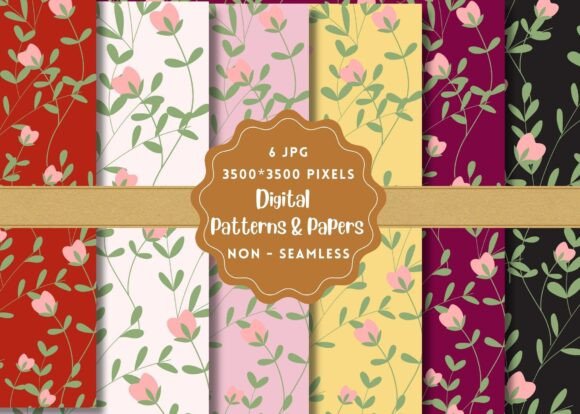
The core offering typically includes a set of six distinct downloadable JPG files, each rendered at a high resolution of 3500 by 3500 pixels. This specific dimension and resolution profile suggests a focus on clarity and scalability, allowing users to zoom in on intricate leaf veins or petal textures without encountering pixelation. The inclusion of 300 DPI (dots per inch) further cements their suitability for physical printing, bridging the gap between digital display and tangible product creation.
Technical Specifications and Format Analysis
When evaluating any digital asset, the file format and resolution are the primary determinants of its utility. Flower Plant Digital Paper Patterns are provided in JPG format, which is a widely supported standard across almost all design software, from Adobe Photoshop and Illustrator to Canva and Microsoft PowerPoint. While vector formats like SVG or EPS offer infinite scalability, JPGs provide a balance of file size manageability and visual fidelity that is often preferred for raster-based workflows.
- Resolution: At 3500x3500 pixels, these patterns offer sufficient detail for large-format prints such as posters, wall art, and fabric rolls. A standard 8x10 inch print at 300 DPI requires approximately 2400x3000 pixels, meaning these files exceed the minimum requirements for most common paper sizes.
- DPI Setting: The 300 DPI specification ensures that when printed, the image density matches professional publishing standards. This prevents the "blocky" appearance often seen when low-resolution screens are blown up for physical media.
- Quantity: The package includes six unique patterns. This variety allows for cohesive collections, enabling designers to mix and match different floral densities or color palettes within a single project, such as a scrapbooking kit or a coordinated gift wrap set.
It is important to note that while JPG is versatile, it is a lossy compression format. For critical editing work where layers need to be preserved, users may need to convert these patterns into PSD (Photoshop Document) files if the source provides layered versions. However, for the purpose of applying a pattern fill or using it as a background texture, the JPG format is highly efficient and compatible.
Comparing Digital Patterns to Traditional Design Methods
To understand the value proposition of Flower Plant Digital Paper Patterns, it is helpful to compare them against alternative approaches to creating botanical backgrounds. Traditionally, designers might create these patterns from scratch using illustration software, purchase stock photography, or use pre-made clipart.
Custom Creation vs. Pre-Made Patterns
Creating a seamless floral pattern from scratch requires significant time and expertise in tiling techniques. Even experienced designers spend hours adjusting angles and overlaps to ensure the pattern repeats invisibly. By utilizing pre-made digital paper patterns, creators bypass this labor-intensive process. The tradeoff is a lack of absolute uniqueness; since these patterns are available for download, they may appear in other people's work. However, for many use cases, such as interior decor mockups or personal stationery, this limitation is negligible compared to the time saved.
Stock Photography vs. Vector-Style Patterns
Another alternative is using high-end stock photographs of flowers. While photography offers realism, it often lacks the stylized consistency required for certain design styles, such as shabby chic or modern minimalist. Flower Plant Digital Paper Patterns typically offer a more controlled aesthetic, with consistent lighting and style across all six designs. This uniformity makes them superior for branding materials where a specific mood must be maintained across multiple touchpoints.
Raster vs. Vector Assets
Users familiar with SVG patterns might question the choice of JPG. Vector patterns can be scaled infinitely without quality loss, making them ideal for web design and responsive layouts. However, vectors can sometimes look "too clean" or artificial for projects aiming for an organic, hand-painted, or textured feel. The 3500x3500 pixel JPGs in this collection likely capture subtle gradients, shadows, and textures that mimic traditional media, providing a warmth that pure vector graphics may lack. For print-heavy products like tote bags or greeting cards, this textural depth is often a deciding factor.
Practical Applications and Use Cases
The versatility of Flower Plant Digital Paper Patterns extends across a wide spectrum of creative industries. Their high resolution and seamless nature make them suitable for both digital and physical outputs. Below are some of the most effective ways to utilize these assets.
Print-on-Demand Products
For entrepreneurs running print-on-demand stores, background patterns are a staple. They can be applied to:
- Fabric and Apparel: The 300 DPI resolution is adequate for sublimation printing on polyester blends, though testing is recommended to ensure color accuracy.
- Home Decor: Wall murals, throw pillows, and curtains benefit from the large pixel dimensions, allowing for expansive floral displays without blurring.
- Paper Goods: Greeting cards, invitation suites, and wrapping paper require crisp details. The 3500x3500 pixel size ensures that even small elements, like tiny buds or dewdrops, remain sharp when printed on cardstock.
Digital Content Creation
Beyond physical goods, these patterns serve as excellent resources for digital designers. They can be used as:
- Website Backgrounds: When tiled correctly, they provide a rich, engaging backdrop for blogs or e-commerce sites without overwhelming the main content.
- Social Media Templates: Creators can overlay text and graphics onto these floral backgrounds to produce Instagram posts or Pinterest pins that stand out visually.
- E-book Covers: The aesthetic appeal of flower plant patterns adds a layer of professionalism and thematic relevance to self-published books, particularly in genres like romance, lifestyle, or gardening.
Crafting and Scrapbooking
DIY enthusiasts and scrapbookers often print digital papers to create custom layouts. The ability to download high-quality JPGs allows crafters to print exactly what they need, reducing waste and ensuring that the colors match their existing embellishments. The six-pattern variety supports complex projects that require contrasting but complementary designs, such as alternating borders or background panels.
Evaluation: Strengths, Limitations, and Decision Factors
Choosing the right digital asset involves weighing benefits against potential drawbacks. Here is a balanced evaluation of Flower Plant Digital Paper Patterns.
Strengths
The primary strength lies in the combination of resolution and quantity. Six high-res files provide ample variety for a complete project cycle. The 300 DPI standard eliminates the need for upsampling, which can degrade image quality. Furthermore, the JPG format ensures broad compatibility, reducing technical barriers for beginners who may not be proficient in handling proprietary file types.
Limitations
The reliance on JPG means that the patterns are not infinitely scalable. If a user attempts to enlarge a pattern beyond its original pixel dimensions for a massive billboard or outdoor banner, quality will suffer. Additionally, because the patterns are static images, they cannot be easily recolored or edited at the component level (e.g., changing a blue flower to red) without advanced photo editing skills. Users needing full editability should consider vector alternatives.
Decision Factors
Readers should consider Flower Plant Digital Paper Patterns if:
- You need high-quality backgrounds for print-on-demand items under 24 inches in width/height.
- You want to save time on graphic design by using pre-tiled, seamless patterns.
- Your workflow relies on raster-based software like Photoshop, Canva, or Procreate.
- You are looking for a cohesive set of six designs rather than sourcing individual images.
Conversely, you might look for other options if:
- You require infinite scalability for very large format printing.
- You need to edit individual elements of the floral design independently.
- Your project demands strict brand uniqueness that pre-made patterns cannot guarantee.
Conclusion on Utility
Flower Plant Digital Paper Patterns represent a solid, practical resource for a wide range of creative endeavors. By offering high-resolution, print-ready JPGs in a convenient multi-pack, they address the common pain points of sourcing quality backgrounds. While they come with the inherent limitations of raster graphics, their strengths in ease of use, compatibility, and visual richness make them a compelling choice for designers, crafters, and small business owners. As with any digital asset, success depends on matching the tool to the specific demands of the project, ensuring that the resolution and format align with the intended output medium.