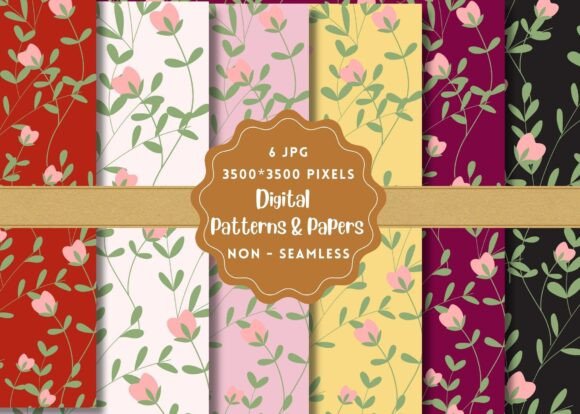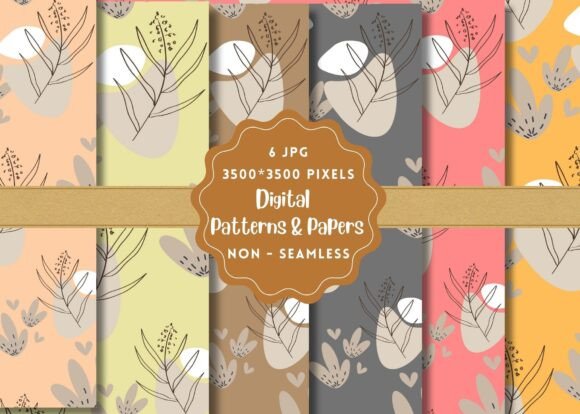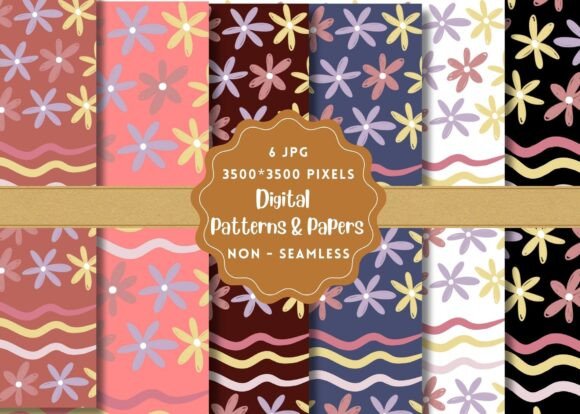
Evaluating Botanical Digital Paper Patterns for Creative Projects
In the realm of digital design and print-on-demand creation, the demand for high-quality, versatile assets has never been higher. Among the various resources available to designers, crafters, and small business owners, Botanical Digital Paper Patterns have emerged as a popular choice for those seeking organic aesthetics without the logistical hurdles of physical inventory. These assets are not merely decorative images; they are functional tools designed to integrate seamlessly into both digital workflows and physical production pipelines.
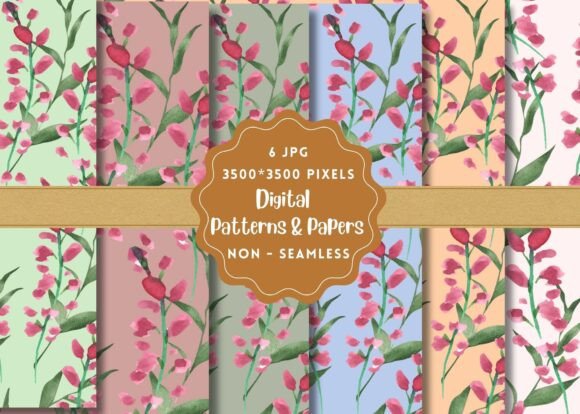
Understanding what constitutes a premium botanical pattern file—and specifically how high-resolution specifications impact usability—is crucial for making informed purchasing decisions. This evaluation explores the technical specifications, creative applications, and comparative advantages of using downloadable digital pattern papers, with a focus on products offering 3500x3500 pixel dimensions and 300 DPI resolution.
Technical Specifications and Image Fidelity
The primary differentiator between low-quality stock imagery and professional-grade digital paper patterns lies in resolution and color depth. When evaluating options like Botanical Digital Paper Patterns, prospective buyers must look beyond the visual preview. The standard for commercial viability is typically defined by two metrics: pixel dimensions and dots per inch (DPI).
- High Resolution Dimensions: A resolution of 3500x3500 pixels provides ample data for scaling. This dimension allows for cropping and resizing without significant loss of detail, which is essential when designing for large-format prints such as wall art or posters.
- 300 DPI Standard: Dots Per Inch determines the density of pixels when printed. At 300 DPI, an image is considered "print-ready" for most commercial printers. Lower resolutions often result in pixelation or blurriness when scaled up, rendering them unsuitable for physical merchandise.
These technical attributes ensure that the intricate details of leaf veins, petal textures, and floral arrangements remain crisp. For users comparing these against vector-based alternatives, it is important to note that while vectors offer infinite scalability, raster formats at 3500x3500 pixels often provide richer texture and photorealistic qualities that are difficult to replicate with pure vector lines.
Versatility Across Digital and Physical Mediums
One of the strongest arguments for utilizing Botanical Digital Paper Patterns is their dual-purpose nature. Unlike specialized graphics that are optimized only for web use, high-resolution JPGs serve as foundational elements for a wide array of outputs.
Physical Product Applications
For entrepreneurs in the print-on-demand space, these patterns are particularly valuable. They can be applied to:
- Apparel and Accessories: Tote bags, scarves, and fabric prints benefit from the seamless tiling capabilities of these patterns.
- Home Décor: Wall art, framed prints, and throw pillows require high fidelity to maintain aesthetic appeal at larger sizes.
- Paper Goods: Greeting cards, scrapbooking pages, and gift wrapping paper rely on the repeating nature of the pattern to create cohesive designs.
The ability to download six distinct JPG files within a single package offers immediate variety. This reduces the need to source multiple disparate assets, streamlining the design process for creators who need to produce collections quickly.
Digital and Template Uses
Beyond physical printing, these high-resolution files are increasingly used in digital contexts. Designers utilize them as backgrounds for social media posts, email newsletters, and website headers. Because the resolution is sufficiently high, even digital displays on Retina screens or high-DPI monitors will render the botanical details sharply. Furthermore, they can serve as overlay elements in photo editing software, adding texture and depth to flat digital illustrations.
Comparative Analysis: Digital Papers vs. Alternatives
When selecting resources for creative projects, users often weigh digital paper patterns against other common formats. Understanding the tradeoffs helps in choosing the right tool for the specific task.
vs. Vector Graphics (SVG/EPS)
Vector graphics are mathematically based and can be scaled infinitely without quality loss. They are ideal for logos and simple icons. However, Botanical Digital Paper Patterns in JPG format offer a level of textural realism that vectors often lack. Vectors can appear "flat" or artificial when used as background textures, whereas high-res JPGs capture the subtle gradients and organic imperfections of real botanical specimens. If the goal is a realistic, textured backdrop, raster patterns are superior. If the goal is clean, scalable line art, vectors are the better choice.
vs. Hand-Drawn Scans
Some creators prefer scanning their own watercolor paintings or ink drawings. While this offers unique originality, it requires significant time, artistic skill, and post-processing work to ensure the scan is free of noise and properly color-corrected. Downloadable digital patterns provide a consistent, professionally edited starting point. They allow non-artists to achieve a polished look immediately. The tradeoff is a lack of personal uniqueness, but the gain in efficiency is substantial for high-volume producers.
vs. Stock Photography
Standard stock photos are often single subjects rather than repeating patterns. Using a stock photo as a background requires extensive editing to remove distracting elements or to create a seamless tile. Dedicated digital paper patterns are pre-seamless, meaning the edges align perfectly when tiled. This saves hours of manipulation in software like Photoshop or Illustrator, making them a more efficient resource for repetitive design tasks.
Evaluation of Best-Fit Scenarios
Deciding whether to invest in Botanical Digital Paper Patterns depends largely on the user's workflow and end goals. The following scenarios highlight where these assets shine.
- Small Business Owners: For those running Etsy shops or POD stores, the cost-effectiveness of a multi-pattern pack is high. The ability to generate dozens of product variations from six files maximizes return on investment.
- Hobbyist Crafters: Individuals creating custom gifts, such as personalized notebooks or scrapbook albums, benefit from the ease of use. No complex software skills are required to apply these JPGs to templates.
- Graphic Design Students: Learning to manipulate textures and create seamless repeats is a valuable skill. Using pre-made high-res patterns allows students to focus on composition and layout rather than creating textures from scratch.
Conversely, users who require absolute copyright exclusivity may find downloaded patterns less suitable, as these assets are often sold to multiple users. In such cases, commissioning custom artwork or creating original vectors might be necessary. Additionally, if the project involves extreme enlargement (e.g., billboard-sized prints), even 3500x3500 pixels may fall short, necessitating specialized large-format assets.
Practical Considerations for Implementation
To get the most out of Botanical Digital Paper Patterns, users should consider the following practical tips during implementation.
Color Management: Since JPGs are RGB-based, colors may shift slightly when converted to CMYK for professional printing. Always perform a test print to ensure color accuracy, especially for brand-sensitive projects.
Seamless Tiling: While many digital patterns are pre-tiled, verifying the seamlessness in your design software is crucial. Look for any visible grid lines or discontinuities at the edges of the pattern repeat.
Licensing Awareness: Even though the prompt mentions usage for physical items, users must always review the specific license agreement of the provider. Some licenses restrict the number of physical copies that can be sold, while others may prohibit reselling the digital file itself. Understanding these boundaries protects intellectual property rights.
Conclusion on Utility and Value
The market for digital design assets is saturated, yet Botanical Digital Paper Patterns remain a staple due to their balance of aesthetic appeal and technical utility. The combination of 3500x3500 pixel resolution and 300 DPI ensures that these files meet the rigorous demands of modern print production while remaining accessible for digital use.
For creators weighing their options, the decision often comes down to efficiency versus originality. If the priority is rapid production of high-quality, textured designs across diverse mediums—from greeting cards to wall décor—these downloadable JPGs offer a robust solution. They bridge the gap between amateur crafting and professional design standards, providing a reliable foundation for creative expression. By understanding their strengths and limitations relative to vectors and custom art, users can strategically incorporate these patterns into their workflow, enhancing productivity without compromising on visual quality.