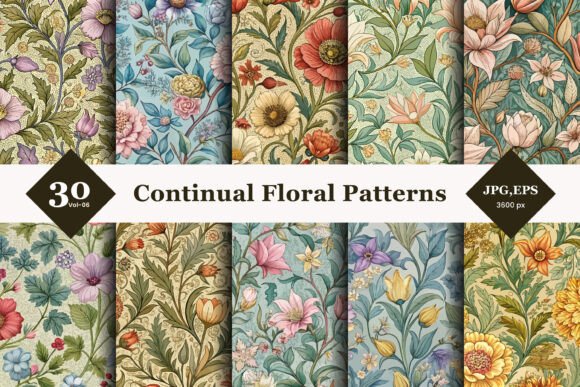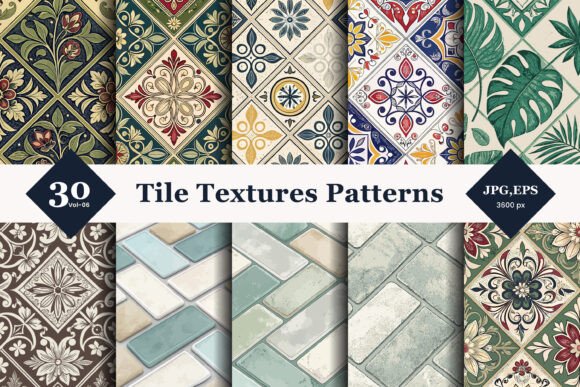
Brick Tile Texture Seamless Patterns 6
In the realm of digital design and architectural visualization, the authenticity of surface materials plays a critical role in the overall impact of a project. Designers often struggle to find textures that are not only visually accurate but also technically versatile enough to adapt to various scales and formats. This is where specialized asset collections become essential tools in a creative workflow. Brick Tile Texture Seamless Patterns 6 represents a curated collection designed to address these specific needs, offering a blend of aesthetic realism and technical precision.
This article provides an objective evaluation of this pattern set, exploring its features, benefits, and potential limitations. By understanding the specific capabilities of this collection, designers can make informed decisions about whether it aligns with their current project requirements or if alternative solutions might be more suitable.
Understanding the Collection
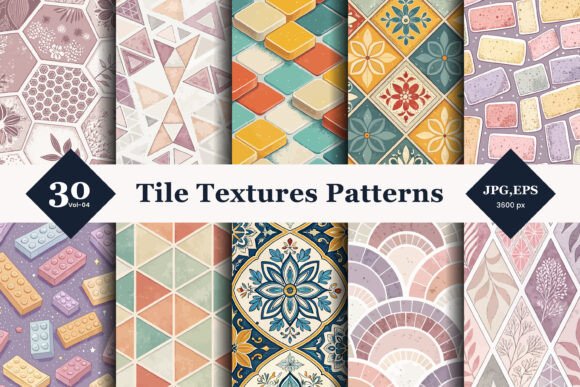
Brick Tile Texture Seamless Patterns 6 is a digital asset pack containing 30 high-resolution patterns focused on brick and tile designs. The primary value proposition of this collection lies in its dual-format availability. Each pattern is provided in both JPG and EPS formats, catering to different stages of the design process. The inclusion of 30 unique patterns allows for variety, ensuring that users are not limited to a single aesthetic interpretation of masonry or tiling.
The term "seamless" is crucial in this context. Seamless patterns are designed to repeat without visible breaks or borders, allowing them to fill large areas of a canvas or document naturally. This feature is particularly important for background textures, material simulations in 3D modeling, and large-scale print projects where continuity is key to visual coherence.
Technical Specifications and Versatility
One of the strongest arguments for utilizing this collection is the technical quality of the files. The assets are delivered at 300 DPI (dots per inch) for the JPG files, which is the standard resolution required for high-quality printing. For digital applications, this resolution ensures clarity even when viewed on high-density displays. However, the true versatility comes from the EPS vector files included in the package.
EPS (Encapsulated PostScript) files are vector-based, meaning they are composed of mathematical equations rather than pixels. This characteristic allows for unlimited resizing without any loss of quality. A designer can scale a brick texture from a small icon size to a massive billboard poster without encountering pixelation or blurriness. This flexibility makes the collection suitable for a wide range of media, including:
- Print Materials: Brochures, business cards, posters, and packaging designs benefit from the crisp edges and detailed textures provided by the vector files.
- Digital Art: Web banners, social media graphics, and UI elements can utilize the high-resolution JPGs for immediate deployment.
- Crafting Projects: Users creating physical mockups or preparing files for laser cutting and engraving can leverage the vector data for precise output.
- Architectural Visualization: Interior designers and architects can use these textures to create realistic renderings of walls, floors, and facades.
Evaluating the Benefits
For professionals seeking to enhance the authenticity of their work, this collection offers several distinct advantages. First, the instant download capability streamlines the workflow. There is no need to wait for shipping or manage complex licensing negotiations for individual assets; the entire library is accessible immediately upon purchase.
Second, the combination of raster and vector formats reduces the need for multiple software conversions. Designers working in Adobe Photoshop can utilize the JPGs for quick compositing, while those using Adobe Illustrator or Inkscape can take advantage of the EPS files for scalable layouts. This dual-format approach caters to hybrid workflows, where a project might start with vector sketching and move into raster-based detailing.
Furthermore, the focus on brick and tile textures addresses a common gap in generic texture libraries. Many free or low-cost resources offer generic noise or wood grain textures but lack the specific structural details of masonry. Brick and tile require precise repetition and realistic mortar lines to look convincing. This collection’s specialization ensures that these details are handled with care, providing a level of detail that enhances the credibility of the final design.
Considerations and Potential Limitations
While the collection offers significant utility, it is important to consider potential limitations before making a decision. The primary consideration is the scope of the subject matter. With 30 patterns dedicated specifically to brick and tile, the variety may feel limited for projects requiring diverse material palettes, such as concrete, metal, or fabric textures. If a designer’s portfolio is heavily focused on organic or industrial materials outside of masonry, this collection might serve as a supplementary asset rather than a primary resource.
Another factor is the learning curve associated with vector editing. While the EPS files offer superior scalability, manipulating vector paths can be more complex than working with simple image layers. Beginners who are comfortable only with raster editing might find the vector files less immediately usable without additional training or assistance.
Additionally, the aesthetic style of the patterns should be reviewed against the intended project. Architectural design trends evolve, and some brick textures may lean towards traditional or rustic styles, which might not fit modern minimalist or futuristic design themes. It is advisable to preview the patterns to ensure they match the specific tonal and stylistic requirements of the project.
Who Is This Collection For?
This collection is a strong fit for graphic designers, interior designers, and architects who frequently incorporate masonry elements into their work. It is particularly useful for freelancers and agencies looking to outsource texture creation, saving time that would otherwise be spent sourcing or creating custom textures from scratch. It is also beneficial for educators teaching design principles, as the high-quality examples can serve as effective teaching aids for texture mapping and material application.
Conversely, individuals looking for highly stylized, abstract, or non-realistic textures may find this collection too literal. Similarly, developers building automated systems that require API access to textures would not benefit from a static file download. For those needs, cloud-based texture services or procedural generation tools might be more appropriate.
Conclusion
Brick Tile Texture Seamless Patterns 6 stands out as a practical and high-quality resource for professionals needing reliable brick and tile textures. Its strength lies in the combination of high-resolution raster files and scalable vector formats, offering flexibility across print and digital mediums. While it may not replace the need for a broader texture library due to its specific subject focus, it excels in delivering authentic, ready-to-use assets for masonry-related designs.
For designers evaluating their current toolkit, this collection offers a straightforward solution to the common problem of finding seamless, high-fidelity brick and tile patterns. By leveraging the instant access and dual-format support, users can enhance the professionalism and realism of their architectural and graphic projects efficiently. Ultimately, the decision to adopt this collection depends on the frequency of masonry-related tasks in one’s workflow and the desire for high-quality, scalable texture assets.